Showing posts with label Fitness. Show all posts

Friday, July 15, 2011

Diet : Fitness and Exercises : Body Mass Index

Body mass index is the ratio of weight to height to estimate body fat. It is advisable to use Body mass index along waist to hip ratio to get complete picture of your weight status. Body mass index is particularly helpful for identifying children and adults at risk of overweight. But it not gives completely accurate information.

The formula for Body mass index is WEIGHT (KG)/HEIGHT (MT2)

BMICategory
Less than 18.5Underweight
18.5 to 24.9Normal weight
25 to 30Over weight
More than 30Obese


Source :- Click Here

Thursday, July 14, 2011

Diet : Fitness and Exercises : Benefits of Exercise

• Regular exercise prevents back pain.

• Helps to maintain bones, muscles and joints healthy.

• Reduces risk of diseases such as cardiovascular, blood pressure, diabetes and cancer.

• Helps in controlling weight.

• Improves metabolism.

• Relieves from stress.

• Reduces feeling of depression and anxiety.

• Exercise improves function of immune system.

• Exercise improves blood and oxygen circulation for all vital organs.

• Exercise slows down ageing.

• Exercise increase insulin sensitivity and prevents diabetes.

• Exercise will help you to sleep well.

• Exercise improve mood and due to the chemicals it releases in the brain called endorphins, it gives you an overall feeling of well being.

Source :- Click Here


Saturday, July 2, 2011

Fitness and Exercises Weight Management

Weight management is balancing energy intake and energy expenditure. In other words maintaining your body weight healthy. To maintain a healthy body weight proper nutrition and physical activity is necessary. Weight management is important throughout the life. Many athletes alter normal energy intake to either gain or lose weight. The goal weight of athletes should be based on body fatness. Weight loss should be achieved before the competitive season begins to ensure maximum strength. Weight gain should be achieved through a gradual increase in energy intake combined with a strength training programme to maximize muscle weight gain over fat weight gain. Fat intake should not exceed 30% of kilocalories from fat.


Source :- Click Here

Monday, March 21, 2011

Fatty liver 'independently increases Type 2 diabetes risk'


How healthy you will be in your 40s depends on what you eat and how you live in your 20s. Our expert charts out a survival strategy for a fitter future

When you are diagnosed with a health disorder in your 40s, there's little that you can do to completely reverse the damage. A wiser option is to start walking the correct lifestyle course much early on and reduce the chances of disorders altogether. Fitness expert and trainer Dilip Heble gives pointers to healthier 20-something habits that will lead to a better 40-something life.

Exercise Make sure you get three to six hours of exercise every week. You can go for a jog, engage yourself in a sport or best, hit the gym.

Benefit
Exercise makes you agile, muscular and boosts your stamina. Most importantly, it reduces your stress levels — a factor that is deemed the root cause for most problems in the 40s. Reduction in the stress levels also helps increase productivity and enables you to deal with environmental pressures. Also, it leads to a lower resting heart rate, which brings down the risk of cardiac disorders.

Supplement yourself
Considering the quality of food available today, it is vital you take multi-vitamin and multi-mineral supplements. You might stock up generously on carbohydrates and proteins, but minus the essential vitamins, you will be far from healthy.

Benefit
These vitamins and minerals important for various functions of the body. For instance, three B vitamins (namely folic acid, B6, and B12) are known to reduce the homocysteine levels in the body, thereby also reducing the risk of dementia.

Read
In this day and age of social networking, most youngsters have forgotten to exercise their brains. Indulge in an activity that challenges your grey matter. Engage in analytical tasks as much as possible.

Switch off
Yes, you must work hard and party harder. But the problem begins when you stick to this mantra every night and end up compromising on your sleep. You may be able to pull this off without much problem in your 20s, but the inadvertent damage will trouble you in your 40s. The body's repair happens during sleep.

Bone supremacy
Bone length might be established by the time you are 20. However, bone density and strength can be built all the way until you are 30. Studies have suggested that young men and women ought to build up a 'bone bank' during this stage which will help avoid osteoporosis later in life.

Follow a routine
A study established that women who were most active between the ages of 18 to 22 stuck to their regimen even during the middle-age and after that. The article published in the journal Medicine & Science said that early intervention was important to bring down the risk of coronary heart disease later.

Shred of hope
A series of 10 studies conducted in the US and Europe tracked the effect of fibre consumption on people. It was found that for each 10 grams of fibre consumed per day, the subjects experienced a 14 per cent reduction in instances of heart disease. Moreover, the risk of dying from a heart disease was brought down by almost 25 per cent.

To exercise or not?


Exercise is important because it improves glucose regulation, reduces the risk of heart disease, hypertension, cholesterol and excess weight. The timing of exercise, the amount of insulin injected and the injection site are important factors to consider before exercise.

A duration of 30 to 60 minutes of moderate-paced intensity exercises five to seven days of the week is recommended. If you are not accustomed to physical activity, you may start with a shorter duration and work your way up. As you become fitter, you can add a few extra minutes to your physical activity.

The two primary classes of diabetes are Type 1 (insulin dependant diabetes mellitus) and Type 2 (non-insulin dependant diabetes mellitus). Both types have distinct causes and different strategies for disease management.

Take care of your diabetes by

Exercising regularly and leading and active lifestyle

Following regular meal timings and planning healthy meals

Taking medicines, if prescribed by your doctor

Essential Dos Before Starting An Exercise Plan

Check with your doctor.

Always talk with your doctor before you start a new physical activity programme. Ask about your medicines — prescription and over-the-counter — and whether you should change the amount you take before you exercise. If you have heart disease, kidney disease, eye problems or foot problems, ask which types of physical activity are safe for you.

Modify calorie intake

Calorie intake should be carefully planned prior to and post-exercise. Also, in consultation with a physician a decrease in insulin dosage may be necessary.

Safety Precautions

Exercise involving heavy weights is not recommended for people with blood pressure, blood vessel or eye problems.

Hypoglycemia (low-blood sugar levels) can happen at the time you're exercising, just afterward, or even up to a day later. You can get shaky, weak, confused, irritable, anxious, hungry, tired, or sweaty. Always keep some form of glucose handy with you in case your sugar levels drop. To help prevent hypoglycemia during physical activity, check your blood glucose before you exercise.

Do not exercise if your blood glucose is above 300, or your fasting blood glucose is above 250 and you have ketones in your urine.

When you exercise, wear cotton socks and athletic shoes that fit well and are comfortable. After you exercise, check your feet for sores, blisters, irritation, cuts, or other injuries.

Drink plenty of fluids during physical activity, since your blood glucose can be affected by dehydration.

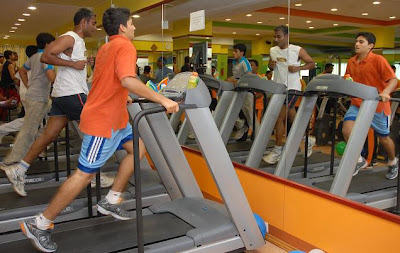
Your ECG tread mill test may be lying about your heart '


The ECG Tread Mill Test commonly used to identify people who are prone to heart attacks is not a fool-proof procedure to know the condition of heart especially among high-risk professionals like pilots, according to a latest study.

The study is an eye opener and probably the established criteria for positive Tread Mill Test (TMT) needs revision in order to avoid treating healthy persons as heart patients, its author Colonel M J Jacob, head of the department of Nuclear Medicine, Army Hospital Research and Refferal said.

The study has been published in the Journal of Associations of Physicians in India.

With increased prevalence of coronary artery disease, people especiall the young are anxious to find out about their risk of suffering from a heart attack in near future and hence, undergo TMT to clear the doubt.

ECG TMT is one of the main tests routinely used to detect the adequacy of the blood supply to cardiac muscles during rest as well as at times of higher stress.

All those who test positive for ECG TMT are put through further tests and procedures.

“A total of 152 people including airline pilots, military personnel making it to higher altitudes, submariners and executives who reported positive for ECG TMT were analysed in order to ensure their cardiac fitness in stress conditions.

“It was found that the test grossly over-estimated the presence of cardiac problems and put healthy persons through unnecessary tests and procedures,” Colonel Jacob said.

Chest discomfort could have been due to other minor problems unrelated to heart like acidity, chest wall muscle main etc, he said.

He said, “ECG TMT is one of the very common investigations being used in the periodic medical examination of high risk professionals.

“It’s time we revise the test criteria. It’s time we revise the test criteria in order stop person from being unduly being subjected to coronary angiography,” he said.

Tuesday, March 15, 2011

A 4 Misunderstood Foods for Human Health

While fruits and vegetables like blueberries, tomatoes and spinach have achieved the celebrity status in the nutritional world, there are certain vegetable items and fruits which are underestimated about their nutritional worth by the common people. They generate little excitement and great level of confusion among the people.

Here is a look at four of such foods which are commonly regarded as “Nutrition Zeroes” but are actually “Nutrition Heroes”. These are those underestimated and even misunderstood veggies that certainly deserve a place in your plate.

AVOCADOS: Avocados are generally regarded as “High Fat” foods. But the fact is though avocados have abundant of fat, the fat is monosaturated in nature. This monosaturated fat protects the heart by lowering Low Density Lipoprotein (LDL) or the “bad” cholesterol level and increasing the level of High Density Lipoprotein (HDL) or the “good” cholesterol. Avocados contain fiber and phytonutrient β-sitosterol. These help control cholesterol and leutin, which promotes eye-health. Avocado is a rich source for Vitamin-E; is the “super-foods for the liver” as it offers the best defense against the liver damage.

CELERY: Celery is often dismissed as a nutrition nonentity. However, it is an excellent source of vitamin K and a rich source of Vitamin C, folate and potassium. It is loaded with phytonutrients like quercetin (which promotes brain and prostate health) and apigenin (which may help slow prostate tumor growth).

PARSELY: Parsely , apart from garnishing, is actually a package of a powerful nutritional punch. Just 1/4th cup of parsely provides more than 300 percent of the daily requirement of Vitamin K and is an excellent source of Vitamin A and C. it is the top source of antioxidant flavonoids which provide protection against prostate, breast, colon, skin and thyroid cancer. It has got an abundance of phytonutrients which protect the sight and chewing a sprig help freshen the breath.

POTATOES: Potatoes have always been regarded as food very rich in fat. But the fact is that potatoes’ nutritional value depends upon how it is prepared. In fact, a medium baked potato with skin has 163 calories and no fat and is an excellent source of potassium, Vitamin C, fiber, magnesium, manganese, niacin, copper and Vitamin B-6. Potatoes supply chlorogenic acid (phytonutrient), which reduce the risk of liver and colon cancer by blocking the formation of carcinogenic nitrosoamines. When eating potatoes, leave the skin on for added fibers and nutrients.

Dhanvantri For Your Family Headline Animator

Search This Blog

Googale Search